Introduction
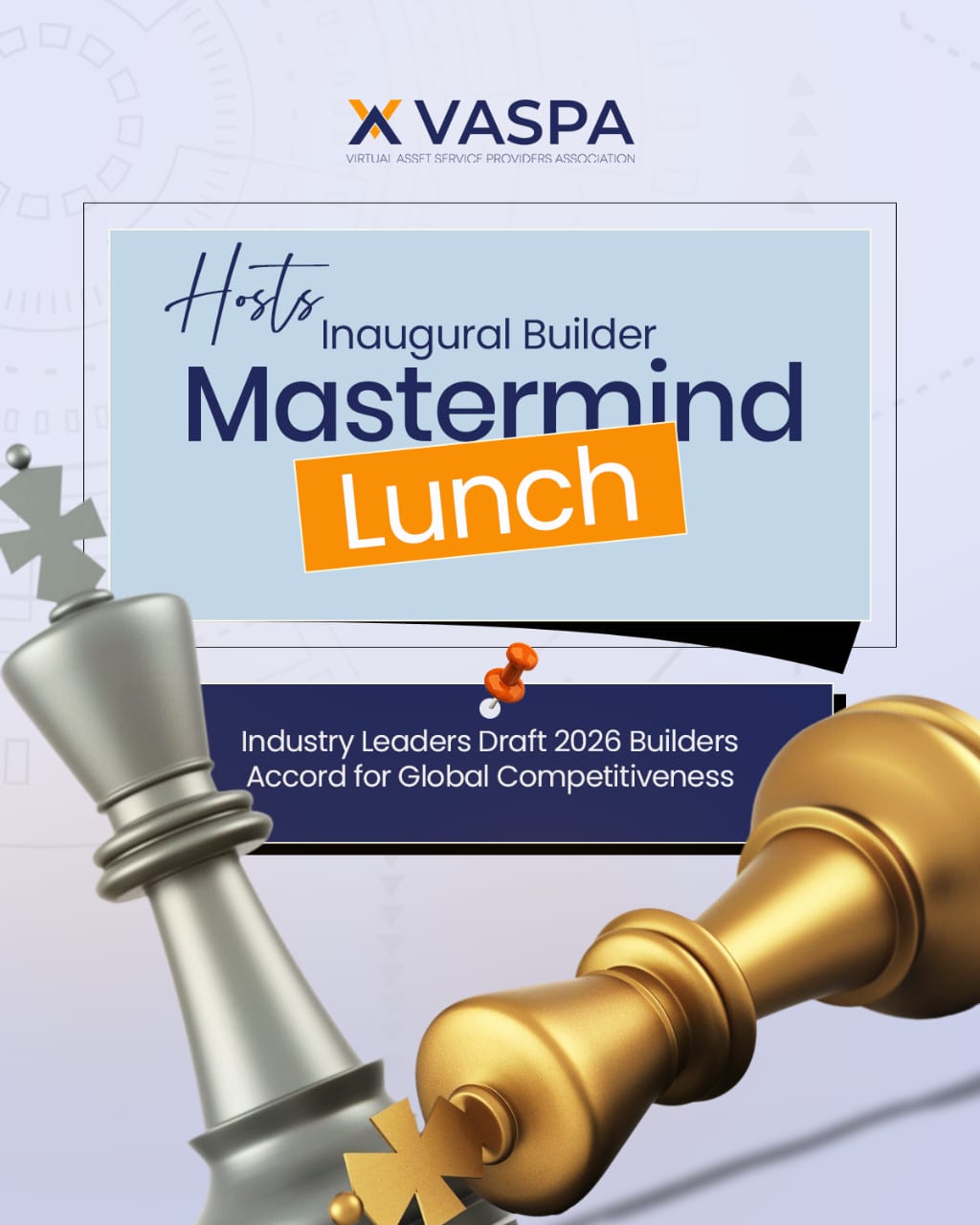
On December 10, 2025, the Virtual Asset Service Providers Association (VASPA) convened a select group of industry leaders in the fintech and virtual asset space under the Chatham House Rule to discuss the future of the African VASP landscape. The objective of this meeting was to develop the 2026 Builders Accord, a coordinated action plan to de-risk, scale, and secure the ecosystem.
Participants acknowledged that Africa has significant potential and is at a critical point in the global digital economy. How then can this potential be translated into a more robust and integrated digital asset market?
In answering this question, it was identified that the African virtual asset ecosystem faces an existential threat that stems from several factors.
The Problem
The participants identified parallels between the VASP industry and the B2C market. Rather than aligning with the B2B fintech space, the VASP sector is treading the B2C path. This isn’t exactly great news, because, unlike in B2B, where local players dominate in Africa due to high entry barriers requiring institutional trust and credibility, B2C is captured by foreign-backed entities with massive capital advantages. A dynamic that might play out in the VASP industry if we do nothing about our current situation.
A speaker opined that the problem local VASPs face isn’t a lack of capital, but rather unpreparedness to capture this funding. The problem is the absence of credible, well-constructed investment opportunities that demonstrate clear value creation and scalable returns. It was projected that local operators have a limited yet crucial window of approximately two years to solidify their market position, or foreign firms will utilize the waiting capital.
Pillars for Strategic Resilience
The Builders Mastermind developed a strategy to address the threats facing the African VASP sector, anchoring it on three key pillars that form the foundation of the 2026 Builders Accord:
A Global Vision and Real Utility
It was said that the African ecosystem needs to evolve beyond on-ramp/off-ramp arbitrage models—something a speaker described as “echo chambers of speculation”. Instead, builders should look at the bigger picture and seek to use the technology to solve real continental issues. The mandate is to find tangible use cases for blockchain technology, including infrastructure development, housing solutions and cross-border trade finance.
Founders were urged to defocus fixation on the local market and embrace a vision that positions their companies to compete internationally alongside the world’s largest virtual asset firms.
A Unified, Global Regulatory Framework
The existing regulatory landscape is fragmented. There are conflicting mandates among several agencies, including the SEC, CBN, and tax authorities, and questions about what virtual assets should be treated as—securities, currencies, or taxable properties?
The country needs a unified SEC-led regulatory authority for virtual assets. While the SEC might be the primary regulatory body, it should coordinate formally with the CBN on monetary policy matters and with other relevant agencies on their respective mandates. This approach, similar to Singapore’s model, would provide companies with a single point of accountability and clear, consistent rules.
As speakers emphasized, stable regulatory frameworks will promote market growth, while conflicting authorities will stifle innovation and give foreign competitors undue advantage in an emerging industry that needs a level playing ground for operators.
Ecosystem Talent Investment
The world of virtual assets seems like a whole other universe. From the lingo to the technology, it is something the average person would not easily grasp, and there seems to be a gleefulness around hoarding this knowledge.
However, the lack of specialized blockchain knowledge outside the immediate VASP sector can paralyze mainstream adoption. If external institutions, including banks and regulatory bodies, cannot hire professionals who understand the technology and compliance, they will not build on it. In addition, reliance on expensive, scarce talent or on the expectation that foreign players will train local talent represents a short-sighted approach that will impede growth and leave the door open to external dominance with limited impact on the local economy. This is not sustainable.
For sustainability, participants stressed the need for the entire ecosystem to take on the responsibility of mainstreaming knowledge of the technology and the industry in general across sectors.
The 2026 Builders Accord: A Continental Blueprint
The result of the Builders Mastermind session is the comprehensive and time-sensitive 2026 Builders Accord, structured around five focus areas. They include the following:
- Strategic posture (build globally competitive products)
- Regulatory harmonization (create consistent rules across Africa)
- Technology & interoperability (build shared digital rails that all platforms can run on)
- Capital & talent development (attract investment and train skilled professionals)
- Monetary sovereignty (develop African digital currencies)
Key Insights from the Dialogue
Beyond the formal Accord, the session surfaced several critical insights on the realities of the VASP ecosystem and the way forward.
On capital formation:
The narrative that capital is scarce is false. Investors, in fact, have more money than credible opportunities. The real constraints are weak customer insights among founders, regulatory incoherence, talent gaps, and copycat entrepreneurship rather than problem-solving.
On stablecoins and sovereignty:
Speakers highlighted that Africa’s sole reliance on foreign-currency-pegged stablecoins represents a geopolitical vulnerability. What the ecosystem needs is its own globally competitive stablecoins. But to avoid isolation, such stablecoins must be locally connected but globally tradable, with real market activity. Anything less will result in the fragmentation of multiple competing local stablecoins that lack substantial utility, technical robustness, and global distribution. This will, logically, prevent any from achieving scale.
On regulatory leadership:
The fintech sector’s success in Africa particularly was attributed not just to innovation, but to consistent, unified ecosystem leadership that engaged Central Banks and other relevant regulators with a coordinated voice. The virtual asset industry may require the same level of strategic engagement.
On interoperability:
The continental scale requires building interoperable platforms capable of powering intra-Africa digital asset transactions. The challenge is not the underlying technology, but how products are positioned and communicated to users who care about the naira, rand, cedi, and KES, not the blockchain powering them.
Conclusion
The Builders Mastermind Lunch underscored the need for the Africa VASP ecosystem to play the right cards this year and the next, since the window for local players might be closing. Cohesive execution can clear the path to the survival, prosperity and global relevance of the 2026 Builders Accord principles. It will shift the focus from local competition to a place on the global stage through unified visions, regulatory harmonization, and proactive talent development.