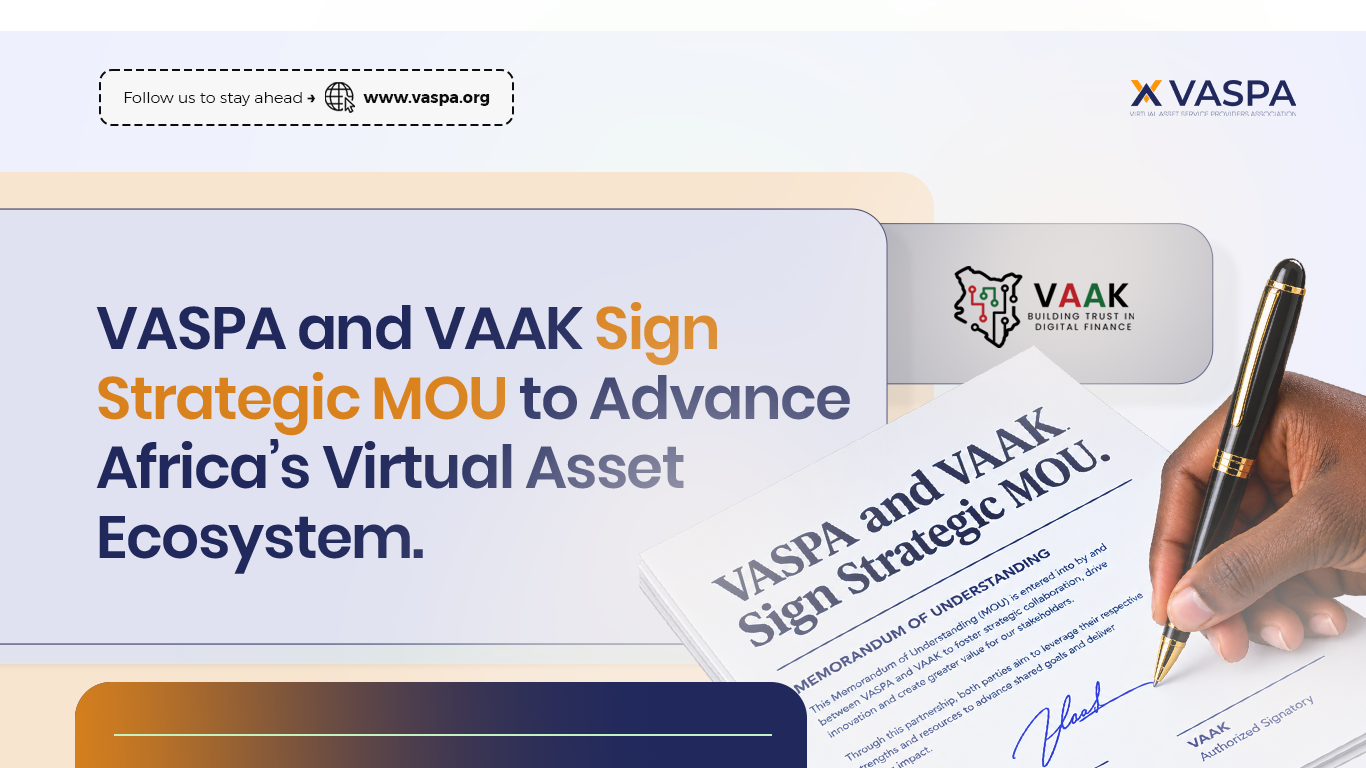
ABUJA FCT, Nigeria and NAIROBI, Kenya – September 23, 2026 – The Virtual Asset Service Providers Association (VASPA) and the Virtual Assets Association of Kenya (VAAK) have officially entered into a Memorandum of Understanding (MoU). Effective September 17, 2026, this agreement establishes a formal framework for cooperation to promote the growth, innovation, and adoption of virtual assets, including stablecoins, across Africa.
VASPA, headquartered at Ventures Park in Abuja FCT, Nigeria, serves as an industry association committed to advancing innovation, regulatory compliance, and industry standards. VAAK, operating from the KMA Center in Nairobi, Kenya, is a registered association dedicated to promoting the responsible use, regulation, and adoption of blockchain technology and virtual assets. Recognizing the mutual benefits of a unified approach, both associations have committed to enhancing cross-border cooperation, stakeholder engagement, and knowledge sharing.
“A unified approach to digital asset policy is no longer optional; it is the prerequisite for scaling Africa’s digital economy,” stated Franklin Peters, Executive Chair of VASPA and CEO & Co-Founder of Boundlesspay. “Driven by VASPA’s pan-African mission, this strategic partnership with VAAK allows us to harmonize our advocacy efforts, ensuring that indigenous innovation can thrive across borders while maintaining rigorous compliance and consumer protection standards.”
Dr. Peter Onyango, Chairperson of VAAK, emphasized the regional impact of the collaboration: “Africa has some of the most dynamic digital asset markets in the world, and both Kenya and Nigeria play leading roles here. By aligning VAAK’s resources and expertise with those of VASPA through this Memorandum of Understanding, we are building a foundation of trust, shared regulatory standards, and capacity building that will elevate not only the East African virtual asset ecosystem, but also ecosystems across Africa given the pan-African outlook of VASPA.”
To achieve these strategic goals, the partnership outlines several core collaborative initiatives:
To ensure structured execution and accountability, a Joint Working Committee has been immediately set up in line with the MoU. This governing body consists of at least two representatives from each party and will be tasked with overseeing the implementation of the MoU, generating annual work plans, defining performance metrics, and reporting on progress every quarter.
The agreement was officially signed by senior leadership from both organizations. Senator Ihenyen, Founding Chair of the Board of Trustees, and Adedeji Owonibi, Member of the Board of Trustees, executed the document on behalf of VASPA. Dr. Peter Onyango, Chairperson, and Robert Muoka, Chief Executive Officer, signed on behalf of VAAK. Designated contact points for ongoing execution include Franklin Peters, Executive Chair of VASPA, and Dr. Peter Onyango of VAAK.
Founded in September 2024, the Virtual Asset Service Providers Association (VASPA) is a Pan-African industry body, comprising individual, corporate, and institutional members from across Africa. Its goal is simple—build trust, clarity, and collaboration across Africa’s virtual asset ecosystem. Through research, advocacy, and member initiatives, VASPA helps define policies that support innovation while protecting users.
Email: info@vaspa.org
Website: www.vaspa.org
Founded in November 2025, the Virtual Assets Association of Kenya (VAAK) is a non-political, non-profit body that serves as a coordination hub for Virtual Asset Service Providers, regulators, and strategic partners in Kenya. VAAK brings together industry, regulators, and partners to build Kenya’s virtual asset ecosystem responsibly. It coordinates standards, facilitates dialogue, and connects Kenya to global best practices.
Email: connect@vaak.ke
Website: www.vaak.ke